Wednesday, 29 March 2017

7 Thoughts about the Nissan Almera


What are the first sedans that come to mind when someone mentions subcompacts? In all likelihood, most would answer the Toyota Vios and Honda City, right? After all, one look outside your office window will confirm the two cars' market dominance. After that, there's the Mazda 2 and Hyundai Accent. But whatever happened to the Nissan Almera?

Truth be told, Nissan's working-class hero has faded into inconspicuousness over the past few years. This is mostly due to the aforementioned models' continued popularity, but also thanks in part to the arrival of newer competitors like the Suzuki Ciaz and the Chevrolet Sail. And it's puzzling, really. Because as we learned from behind the Almera's wheel, the humble sedan still offers plenty to merit consideration on most shortlists.

We were given the opportunity to drive the top-of-the-line 1.5-liter VL AT variant over the course of the 2016 holiday rush. That's more than a week's worth of delivering gifts, fetching relatives and driving to and from parties. Here's what we learned during that time:


1) There's room, and lots of it. Subcompact? Sitting inside the cabin, you'd be forgiven for mistaking the Almera belongs to a larger segment. The sedan boasts what could arguably be the most impressive headroom and legroom in its class, comfortably sitting five passengers over moderate distances and offering more than enough room to stretch in while stuck in traffic.


2) The trunk is just as cavernous. Abundant space isn't limited to the car's interior. Loading and unloading gifts, luggage and other cargo was a cinch, and most of the time there's room to spare. There's enough room back there for the entire family's holiday shopping run, and then some.


3) Its looks won't wow. The Almera fails to grab attention, much less an aspiring motorist's imagination. There's little to nothing youthful, edgy or sporty about this sedan, despite a much-needed mid-2015 refresh. But on a glass half full note, this isn't necessarily a negative. The design conveys a professional and classy blue collar vibe—one which will appeal to fleet managers, sales reps, or anyone with an eye for practicality.


4) It has Grade A air-conditioning. It's a Nissan, so this shouldn't come as too much of a surprise. In fact, we hardly ever had to switch on the rear passenger vents (yes, there are A/C vents in the rear). And on occasions we did, occupants would complain that the cabin climate was too chilly. Begs us to ask if they're even necessary, but then again, summers here are something else.


5) The ride is composed, performance is reliable. The Almera's noise vibration and harshness levels impress. Save for only deeper potholes and streets where it's blatantly obvious the local government's been stingy with its project funding, the sedan handily absorbs bumps and other imperfections at city speeds. Throttle response is good, and overtaking trucks and PUVs (during the rare instances where we weren't stuck in traffic) didn't pose a problem.


6) We're not sure what to think of the interior. Frankly, we've got mixed feelings regarding this part. The Almera's cabin is like Zooey Deschanel in the sense that it treads the fine line between a quirky we can appreciate, and one that's downright confusing. Rounded out A/C vents, a chunky steering wheel, glossy plastic and bottle opener door handles make for a relatively playful-looking setup. Depending on how you look at it, that could betray its professional exterior. But maybe it's just us.


7) It has enough features to get by. Our top-spec unit came with a push/start button, remote trunk control, rear passenger A/C system, and rear parking sensors. Music is limited to FM radio and an auxiliary connection—no touchscreen or Bluetooth, unfortunately. It's pretty bare entertainment-wise for a top-spec subcompact, but other than that, it's enough.

Overall, the Nissan Almera offers great practicality and efficient performance—we averaged 8.5km/L in city driving/holiday traffic—in a professional-looking package. Admittedly, the unit we had felt a little basic for a top-spec variant. Depending on the buyer, this can put it in a disadvantage as competition in the segment is as stiff as ever, both price-wise and in terms of features.


Still (yuppies be damned), Nissan mainly markets the Almera as a blue collar daily driver, and from our experience it plays this role admirably. Its great space and impressive comfort make it relevant in an increasingly cut-throat subcompact sedan market, and this is something anyone driving home tired from the daily grind can appreciate. In the immortal words of John Lennon: "a working class hero is something to be."


Before deciding if the Almera is the ride for you, pop into a reputable Nissan dealership in your area and test drive the Nissan Almera for yourself.


Original source: http://www.topgear.com.ph/features/feature-articles/nissan-almera-working-class-hero-a00013-20170116

Thursday, 26 January 2017

10 facts about the Nissan Almera

Here you will find interesting titbits of information that includes everything from the model’s many names to its makeovers and the features and specs of the newest Nissan Almera.

The Alméras Name

Alméras is the family name of French racing car drivers during the eighties. Famous French racers with this last name include Phillippe Alméras, who competed in both the 2001 and 2002 French Formula Renault championships, Jacques Alméras and Jean-Marie Alméras.
nissan-N15-Almera-1988

All of its names

The Almera is known by a couple of other names across the globe. Called the Nissan Pulsar from 1995 to 2000, it is known as the Nissan Sentra in New Zealand and, from 2000 to 2006, it was known as the Nissan Bluebird Sylphy. The N15 Pulsar was launched in 1995 and sold in Europe as the Almera.

The first generation N15 Almera Manufactured from 1995 to 2000, the very first Nissan Almera hit the streets in late 1995. It was the Nissan Sunny (N14) replacement and was almost identical to the Nissan Pulsar (N15) which was sold in Japan at that time. The differences between the Pulsar and the Almera for sale at that time included a petrol engine range as well as different trim options.

Engine types available during this period included the petrol 1.4 Si GA14DE, the petrol 1.6 Sri GA16DE and the diesel 2.0 GTi SR20DE.
nissan-Almera-1995

The first facelift

In 1998 the Almera received its first makeover. For the Si and Sri the front bumpers received a redesign and front splitters were added. The GTi has a standard all-round body kit and the lip spoilers boasted integrated brake lights. The front indicators of this model and the headlights also featured black surrounds.
The GTi’s body kit was also made studier and was altered to feature a more subtle look. A rear splitter as well as vents were added to the GTi. Interestingly enough, the Phase 1 (pre makeover) GTi had thin, brittle, plastic splitters, hence the more studier Phase 2 (post makeover) body kit.
It is also not uncommon to find a Phase 1 GTi sporting Phase 2 bumpers or even no splitter at all.
nissan-Almera-gti

The second generation N16 Nissan Almera

Rolling out onto the streets in 2000, the second generation Nissan Almera for sale had curvier and smoother lines than the first generation. This Nissan was the first vehicle based on Nissan’s global MS-Platform. Also known as the M&S Platform and the FF-S platform, it is a platform for front wheel drive vehicles that share floor panels, transmission, engine and chassis parts and components.
The models that were part of the Nissan MS-Platform during that time included the Nissan Almera Tino, The Nissan Sunny (or Sentra) and the Nissan Bluebird Sylphy G10, to name but a few examples.
N16-Nissan-Almera-5-door

2000 – 2006 Almera Models

During this time there were three different body styles available – this included the 3 or 5 door hatchback, a 4 door saloon Almera. Engine options included a 1.8 or 1.5 QC petrol engine, and a 2.2 direct injected turbo-diesel or common rail turbo-diesel.
The five door hatchback Almera was exported from the United Kingdom to New Zealand and Australia. Here the Almera formed part of the Nissan Pulsar (N16) collection of vehicles being sold. Note that the sedan of this time was based on the Bluebird Sylphy but featured a different style front.
While the N16 Almera for sale boasted a number of stunning improvements (as seen in its improved tyre grip and handling), there were some complaints. Though it had a bigger boot, there was a decrease in legroom for rear passengers – this was due to the shorter wheelbase which measured in at 2.53 metres.
Nissan-almera-2006

The Second Facelift

With 2003 swinging into action, the Nissan Almera got another makeover. Some of the upgrades for the Almera’s of that time include the return of the MacPherson Strut front suspension as well as Nissan’s multi-link rear suspension.
Visually, the Almera was turned into a hot little number boasting the addition of chrome, projector-like headlights. Other additions for the 2003 facelift included a new grille, circular fog lights (but only for some models) and even an engine air intake that was integrated into the front bumper.
The interior also got its fair share of beautification featuring the use of higher quality materials as well as a colour screen ‘control centre’ from where you could control all your Almera’s awesome functions.
Nissan-Almera-2003-interior

Building the made-over Nissan Almera

Sold as the Nissan Pulsar in the Asia-Pacific, the made-over Almera was manufactured in the United Kingdom and, more specifically, in Sunderland, a city forming part of Tyne and Wear in North East England.
The Almera was also being sold in Mexico – the available models here included a five-door manual five-speed model, a three door sport version (that came with five-speed manual transmission, curtain air bags at the side and fog lamps) and a five-door three-speed automatic comfort Almera.

Other Almera versions

In 2007 and 2008 the Nissan Tiida was introduced into several countries as a replacement for the Almera. An interesting fact to note here is that the Tiida is not officially imported into the UK, but is available for sale through the Arnold Clark dealership network since March of 2009. These models for sale in the UK are sourced from Ireland.
Nissan-Tiida-2008
Based on the Nissan Bluebird Sylphy N16, the Renault Samsung SM3 was made in South Korea and sold as the second generation of the Almera.
After undergoing a makeover in 2005, it was sold from 2006 as the Almera Classic (in the Ukraine and Russia), the Almera B10 (in Venezuela, Central America and Ecuador) and the Sunny B10 (in the Middle East). In Chile it was sold as the Samsung SM3 and in Mexico, Columbia, Egypt and Libya it was sold as the Renault Scala.
************
October of 2011 saw Nissan release an economical saloon model for the Eco-car project in Thailand – it was named the Nissan Almera and was basically a revised version of the Nissan Latio N17. The Latio was launched in 2013 as the Almera in Malaysia and the Philippines.
In Russia, the Almera, which was based on the 2005 Nissan Bluebird Sylphy G11, was launched in August of 2012. With the same design styles as the Bluebird Sylphy, it did feature a redesigned dashboard. These models released had a 1.6 petrol engine with a four-speed automatic or five-speed manual transmission. This model is manufactured in Russia at the AvtoVAZ plant.
nissan-Almera-2012-russia

The New Nissan Almera

Finally arriving at the newest Nissan Almera for sale in South Africa, our country’s stunning model feature tons of awesome goodies that include tech, performance and safety features. Only two petrol models are for sale in South Africa – the 1.5
Acenta MT and the 1.5 Acenta AT.
nissan-Almera-2015-black
Equipped with a multi-function drive computer, you get all the information you need – when you want and when you need it – by simply looking at your display. From your fuel consumption to the distance you can still cover on the fuel you have, the Almera is even equipped with a rear parking sensor.
In terms of safety, these Nissan cars has ABS, EBS (electronic Brake-Force Distribution) and halogen headlights. These models also come with a Supplement Restraint System (SRS), enhanced safety technology in the form of an advanced zone body construction, and ISOFIX (giving you anchor points for child restraint).
nissan-Almera-2015-black-interior
This Almera for sale also has a boot capacity of 490 litres and is available in six different colours. In terms of dimensions, it has an overall length of 4 425 millimetres, a ground clearance of 160 millimetres, an overall width of 1 695 millimetres, and overall height of 1 505 millimetres and a wheelbase of 2 600 millimetres (70 millimetres longer than the wheelbase of the Almera models produced during 2000 to 2006).
To test drive a Nissan Almera, pop into a local Nissan dealership such as Group 1 Nissan, and find out for yourself why this vehicle is so popular.

Thursday, 5 January 2017

Nissan's new Kicks compact SUV for SA


Perhaps having realised that the Nissan Juke is just too polarising for mass success in all markets, Nissan has created a new B-segment crossover called the Kicks.
Nissan says it's not destined to replace the Juke, however, meaning it'll likely complement it as an alternative for those seeking a more practical alternative that's also a bit easier on the eye. The Kicks is smaller than the Qashqai and it's even slightly narrower than the Juke, although its greater overall length (and wheelbase) will make the cabin roomier where it counts.
Though appearing to have been designed mainly with south and central American markets in mind - it will be built in Brazil and Mexico - the Kicks is set to become a global product that will be sold in 80 markets. Nissan South Africa has confirmed that the Kicks is expected to go on sale here, although that will likely only happen in 2018.
The cabin design follows a more conservative route than the Juke, yet still packs a few racy touches such as a flat-bottomed steering wheel, and it does appear to be technologically up to speed, with a large touch-screen and four on-board cameras serving the Around View Monitor and Moving Object Detection gizmos.
Nissan is still leaving us to guess what powers the Kicks, promising full details closer to its Brazilian launch, but we'd imagine that Nissan's 1.2-litre turbo-petrol engine, found in the Juke and Qashqai, will probably be the mainstay of the range.
Article and image source: http://www.iol.co.za/motoring/latest-launches/nissans-new-kicks-compact-suv-for-sa-2017428

Thursday, 11 August 2016

Top Ten Reasons to Buy a Nissan Sentra - The Pros

First introduced to American drivers in 1982, the Nissan Sentra has remained one of the most popular compact sedans over the years. The Nissan Sentra is a great choice for the drivers who are on a limited budget. While the entry-level model offers all of the basic essentials, the top-of-the-line SL trim comes equipped with an impressive list of goodies.


1) Great Price
Drivers who are looking to purchase a quality ride for less than $20,000 should give the Sentra some serious thought. With a starting price of around $16,000, the base S trim is the least expensive option in the Sentra lineup. Meanwhile, the well-equipped SL trim tops out at a tad more than $20,000. In the eyes of some automotive reviewers, the Sentra is the best value in its class. *Prices correct at time of original article.

2) Excellent Fuel Economy
The new Sentra is a very efficient driving machine. All trims are capable of delivering at least 39 mpg on the open road. The sedan also has an outstanding fuel economy rating of 30 miles-per-gallon in the city. However, a special FE package further enhances the car’s gas mileage. The available FE package includes fuel-saving components such as low-rolling resistance tires.

3) Well-Built Engine
All versions of the Sentra come with a peppy 1.8-liter, four-cylinder engine. The 130-horsepower engine delivers just the right amount of pep for merging onto busy freeways. Although most people will find the overall performance of the Sentra to be commendable, the engine’s strong point is its durability. Nissan service centers have received very few complaints about any major engine problems.

4) Xtronic CVT Transmission
While the base model comes standard with a six-speed manual gearbox, all of the upper-level trims come standard with a Xtronic CVT transmission. Over the years, Nissan engineers have been able to drastically improve the performance of the CVT transmission. Not only is the Xtronic system very responsive in all driving situations, but it also helps the Sentra to obtain the best possible gas mileage.

5) Outstanding Amount of Interior Room
Although compact sedans are not traditionally known for their interior space, the Sentra actually provides a very roomy interior. Even the rear-seat passengers will have plenty of room to stretch their legs. The sedan’s large trunk will certainly come in handy when taking road trips. If needed, the back seats can also be folded down to further enhance the car’s cargo area.

6) Attractive Styling
Car shoppers who love the appearance of the popular Nissan Altima will likely adore the Sentra’s styling. The Nissan Sentra is essentially a smaller version of the Altima. The compact sedan’s refined appearance is highlighted by a smooth grille and an elegant rear-end. Drivers who desire more sportiness should opt for the available SR model. The Sentra SR features a spoiler, performance wheels, and a more aggressive front fascia.

7) Convenient Features
Bluetooth connectivity and USB ports will now come standard on every trim. Some of the other standard conveniences include keyless entry, a telescoping steering wheel, and air conditioning. Drivers who plan to use their Sentra for traveling to different areas should upgrade to navigation system. The addition of a rear-view camera system instantly improves the vehicle's on-road safety. Music lovers should definitely consider upgrading to the eight-speaker Bose sound system.

8) Available Safety Upgrades
All versions of the Sentra feature a new Easy Fill Tire Alert system. The system will automatically alert the car owner when they have inflated the tires to the recommended pressure. Buyers of the new Sentra also have the option of upgrading to a four-wheel disc braking system. While the Sentra does not offer an all-wheel drive system, the traction control system does a great job of keeping the tires glued to the pavement.

9) Affordable Maintenance
After the Sentra’s factory warranty expires, the owner will have to cover the cost of any repair work. Fortunately, the replacement parts are very affordable. This is good news for the car owners who need to keep a sharp eye on their monthly finances.

10) Good Visibility
The Sentra offers good visibility when traveling on the highway and within the city. The driver will not have to worry about any large window pillars blocking their view of the road ahead.

In conclusion, the Nissan Sentra is a all round excellent value for money family vehicle. To view or test drive, find a reputable Nissan Sentra dealership near you, such as Group 1 Nissan.

Original article source: http://welovenissan.tumblr.com/post/148781926968/top-ten-reasons-to-buy-a-nissan-sentra-the-pros

Tuesday, 2 August 2016

Nissan Navara Double Cab Motoring Review


​A HOST of new bakkies have been launched to our local market recently. To remind us of the Navara’s dominance, Nissan recently invited us to the Witsand Nature Reserve in the Kalahari Desert to put this big brute through its paces.
​
Unseasonable rain may have settled much of the dusty Kalahari, but it did make for an interesting and more challenging adventure as this left the landscape rather muddy. Our weapon of choice for the expedition was the Nissan Navara 2.5 dCi 4x4 LE. 

Equipped with a strong 140kW of power and a massive 450Nm of torque, this 2.5-litre diesel powertrain supplies the Navara with enough raw pulling power to make light work of whatever Mother Nature threw at it. Power is transferred to the wheels via a six-speed manual transmission, or a five-speed auto. Utilising the muscle on offer and flicking between high and low-range as well as sporting a differential lock, this bakkie climbed dunes, and clambered through some treacherous dongas. 

The ground clearance was constantly challenged as the damp earth fell away, while idling through the river beds. Boasting 230mm of ground clearance along with a 30 degrees approach angle, 22 degrees ramp and 24 degrees departure angles, the Navara was victorious in its escapades.
Dunes can reach 100 metres in height and 10 kilometres in length. Add to this, sweltering temperatures and a barren landscape and you quickly realise that the conditions are, well challenging to say the least. Luckily, the Navara is fitted with niceties and useful creature comforts like automatic climate control, electric windows, and radio/CD with USB connectivity to ensure you always travel in comfort. 

On the safety front, the big bakkie houses ABS brakes with EBD and six airbags. So, despite its ruggedness and robust abilities, it still offers a safe cabin for its occupants.
Some people may feel the Navara is in need of an upgrade, but it’s still one of the best looking bakkies on the market. And after conquering the harsh African landscape, it cements its place as a firm South African favourite. And it’s easy to see why. It isn’t shy to get dirty and put in the hard work. 

To find out more about the Nissan Navara, you can speak to a reputable dealers, such as Group 1 Nissan.

Source: http://simplysoldonnissans.weebly.com/blog/nissan-navara-double-cab-motoring-review

Monday, 1 August 2016

All-new Nissan X-trail: Keep up with your true self

Are you ready for adventure? Keep up with your true self with the all-new Nissan X-Trail!

For more info on the X-trail, such as Nissan X-trail Engine specs, feel free to speak to a reputable dealer such as Group 1 Nissan.


Source: NissanUK YouTube Channel

Thursday, 30 June 2016

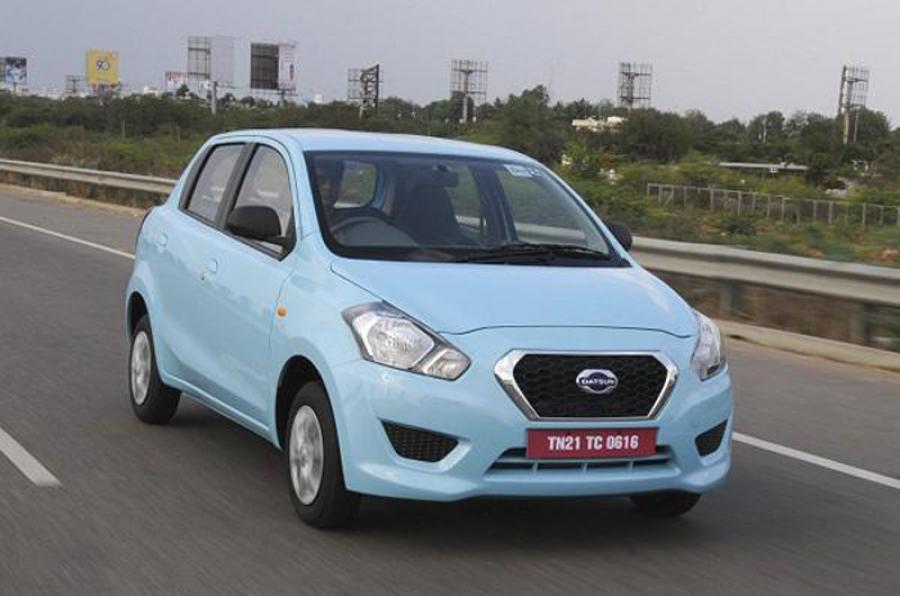
Datsun Go Review


The Datsun Go marks the return of the Datsun marque after a 30-year absence. Like Dacia, Datsun is conceived to be the budget alternative to its established parent brand.

But unlike Dacia, Datsun is targeted at emerging markets such as India, where it is just about to go on sale.

The Go’s styling is inoffensive, and the diamond-shaped grille, the angular, peeled-back headlamps and its attractive lines have a certain appeal. It's clear that the designers have tried hard to keep it from looking too basic, even if the skinny 13in wheels look woefully small in those big arches.

Under the bonnet is a 67bhp 1.2-litre three-cylinder petrol motor that's similar to that found in the Nissan Micra. It makes slightly less power than in the Nissan, but then again, the Datsun Go isn't that heavy.

The Go measures 3785mm long and 1635mm wide and has a wheelbase of 2450mm. Compare that to the Suzuki Alto which is 3580mm long, 1680mm wide and has a 2,360mm wheelbase and you can see how much more car is offered for the money.

The Datsun Go won't come with ABS and there aren't any airbags either. In fact, even basic safety equipment is missing – the rear windshield doesn't get a demister and there's no wiper, either.

It's the car's light kerb weight that makes it such a peppy performer.

It responds to light taps on the throttle eagerly and is happy pulling away from low engine speeds in high gear. The mid-range is strong and it's only when you get to around 4000rpm that it gets thrummy. The responsive nature of the engine makes it really easy to drive around the city – you can stick it in third gear and potter around town all day. The five-speed manual is also light and the clutch is progressive enough.

Push the engine hard and it will easily propel the Datsun Go to triple-digit speeds. Our testing equipment shows that it will get from rest to 62mph in 15sec and you can easily cruise at those speeds with minimum fuss.

The downsides? Well, there’s a bit of vibration from the three-cylinder engine at idle, but that's it. It smoothens out when you rev it, and also quiets down when you are cruising.


Around town, the ride is quite supple but there is an underlying firmness. Bigger bumps thump through but it has a big-car feel in the way it tackles bad roads. Less impressive is the way the suspension and road noise filters into the cabin, especially on coarse surfaces. Evidence of being built to a price is apparent by the lack of soundproofing in the wheel wells.

The Go is an easy car to drive though – the power steering is light, and it feels very manageable with great visibility. It doesn't like to be pushed hard – around corners, the suspension's generous travel allows for plenty of body roll and even though grip is adequate, the car moves about on its tall tyres. But there's decent stability at speed and the steering weights up enough to give a precise feel.

Inside, the driver is presented with a simple, three-spoke steering wheel and even simpler dials – there's a speedometer and a digital display that includes a rev counter, trip computer (that's small and hard to read on the move) and a fuel gauge.

The centre console is similarly spartan and does without radio or CD player. Even though the Go gets front power windows, the driver has a switch only on their side. And the rear windows are manual. Then there's the bare metal adjuster for the seat's fore and aft movement and rear seatbelts that don't automatically retract.

The driving position is comfortable, with good visibility, though some might find the dash-mounted gear lever set quite high and even a bit too far back, especially for those with long arms.

There is, however, plenty of space. Clever management of space – the dash-mounted gear lever and the slim seats – makes it quite an airy cabin. There’s a decent amount of rear legroom, but the rear seats are unsupportive.

The Datsun Go proves to be quite a cheap, easy-to-own car. Datsun will also offer a two-year/unlimited mileage comprehensive warranty when the Go goes on sale later this month.

The manufacturer claims a fuel efficiency figure of 58.2mpg. The Go will be sold through reputable Nissan dealerships such as Group 1 Nissan and in markets where it'll be sold where there are no Nissan dealerships, Datsun plans to set up its own.

For now though, the Go has a peppy engine, spacious interior and is easy to drive. And when you think about how much money it costs, it seems like a lot of car for the money.

Datsun Go
0-62mph 15sec; Top speed na; Economy 58.2mpg; CO2 na; Kerb weight na; Engine 3 cyls, 1198cc; Power 67bhp at 5000rpm; Torque 77lb ft at 4000rpm; Gearbox 5-spd manual. Price: Speak to a local dealer such as Group 1 Nissan for the Datsun GO price in South Africa.

Image source: http://images.cdn.autocar.co.uk/sites/autocar.co.uk/files/styles/gallery_slide/public/datsun-go-1_0_0.jpg?itok=sOhNh-nm